Affiliate Disclosure: Zornavik participates in the Amazon Services LLC Associates Program and other affiliate programs. If you click a link on this page and make a purchase, we may earn a small commission at no extra cost to you. This does not influence our recommendations — we only feature products we genuinely believe offer value.
▼ Quick Picks — Jump to Any Review
- → 1. Dreame X60 Max Ultra — Best Overall
- → 2. Roborock Saros 20 — Best Navigation
- → 3. Ecovacs Deebot X8 Pro Omni — Best Mopping Quality
- → 4. Shark PowerDetect 2-in-1 — Best Value / Bagless
- → 5. Eufy Omni S1 Pro — Best Deep Scrubbing
Robot vacuum and mop combos have gone through a serious evolution in the last two years. What used to be a basic floor sweeper with a damp cloth attached is now a fully autonomous cleaning system that maps your home, recognizes individual rooms, avoids cables and pet waste, washes its own mop pads in hot water, refills its own water tank, and empties its own dustbin — all without any input from you.
The 2026 generation raised the bar in four specific ways. Suction power on flagship models now reaches 35,000–36,000 Pa, a figure that was reserved for industrial-grade equipment not long ago. Mop washing temperatures climbed to 100°C boiling water, which matters because warm water actually breaks down grease and bacteria rather than just rinsing dirt around. Obstacle avoidance now uses multi-camera AI systems that recognize over 300 object types in real time. And automatic mop lifting — where the robot raises its mop pads before crossing onto carpet — has become standard on every model worth recommending.
The challenge for buyers is that these improvements don't apply equally across every model in the market. A robot with impressive Pa numbers on the box may have a mopping system that just drags a wet pad around. A model with marketing-heavy AI language may navigate poorly in a cluttered real home. This guide focuses on what each robot actually does well, where it makes sense, and where it doesn't.
Best Robot Vacuum and Mop Combos of 2026 — Our Top 5 Picks
Each pick on this list was chosen for a specific reason — not to fill slots. The right robot for your home depends on floor type, layout, presence of pets, and how much hands-free automation you actually want.
1. Dreame X60 Max Ultra — Best Overall Robot Vacuum Mop Combo
 Check Price on Amazon ↗
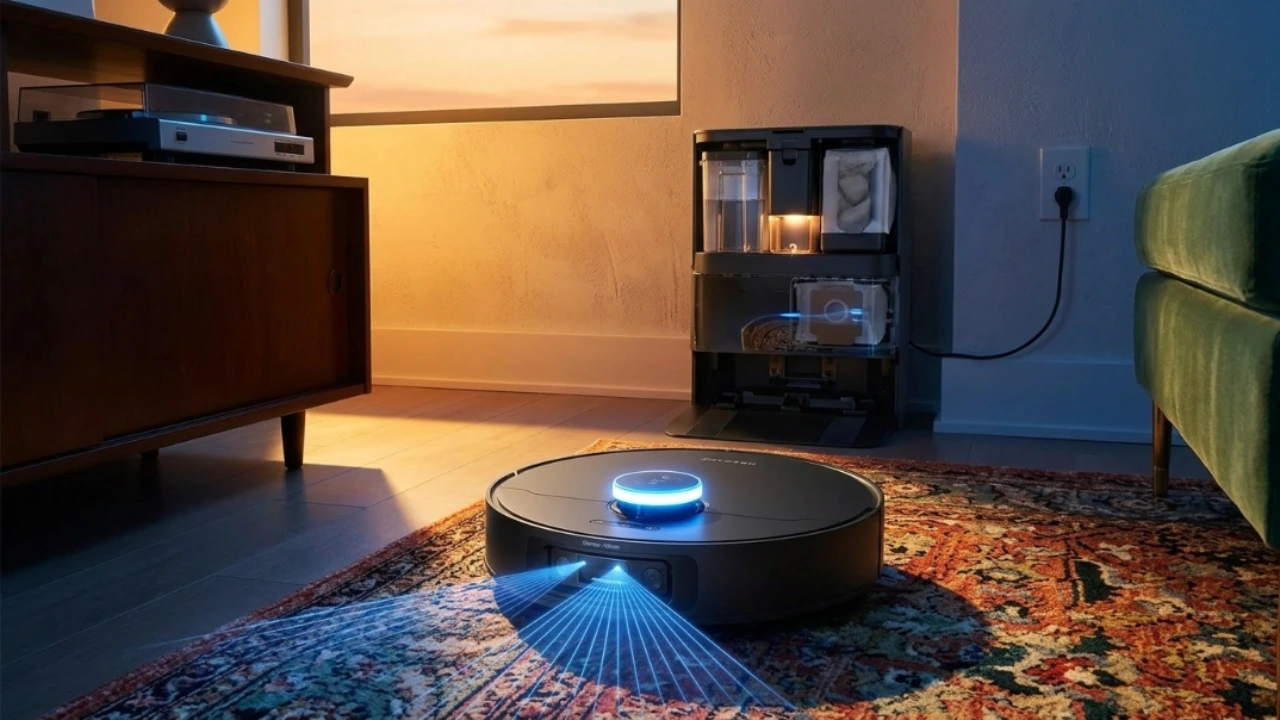
Suction Power: 35,000 Pa
Mopping System: Dual rotating pads, 230 RPM, 15N downward pressure
Robot Height (cleaning mode): 7.95 cm — retractable LiDAR tower
Mop Pad Wash Temperature: 100°C boiling water
Obstacle Clearance: Up to 8.8 cm
Navigation: LiDAR + AI obstacle recognition
Dock Functions: Auto-empty, auto-fill, mop wash and dry
The Dreame X60 Max Ultra earns the top position because it doesn't compromise on either side of the vacuum-mop equation. Most robot combos are strong vacuums with mediocre mopping, or good moppers with weak suction. The X60 Max Ultra handles both at a level that outclasses the competition in 2026.
Start with the suction. At 35,000 Pa, this is among the highest suction figures available in the robot vacuum category. On hard floors, that translates to thorough debris pickup in a single pass — no second runs needed to catch what the first missed. On low-to-medium pile carpet, it extracts embedded grit and fine dust that lower-Pa robots leave behind. The cleaning performance on carpet is noticeably different from mid-range models, not marginally different.
The mopping system uses dual rotating pads that spin at 230 RPM with 15N of downward pressure applied to the floor surface. That pressure figure matters — it's what separates scrubbing from wiping. A wet pad with no downward force just redistributes surface moisture. 15N of applied pressure actually breaks up dried food residue, paw prints, and light grease on tile or hardwood. After each cleaning session, the base station washes those mop pads in 100°C boiling water. That temperature sanitizes the pads rather than just rinsing them, which prevents odor buildup over time and means the mop that goes down on your kitchen floor the next morning is actually clean.
The engineering solution that makes this robot genuinely unique is the retractable LiDAR tower. On most robot vacuums, the navigation tower adds several centimeters to the robot's height, preventing it from fitting under sofas, beds, and low-clearance furniture. The X60 Max Ultra retracts that tower when approaching low-clearance areas, dropping the chassis to 7.95 cm — low enough to clean under most standard sofas and platform beds that other robots simply skip. Before it lowers the tower, it has already mapped the room using full-height LiDAR, so it navigates accurately even while operating in reduced-height mode.
Obstacle clearance reaches 8.8 cm, which handles door thresholds, thick rug edges, and the transition strips between rooms without getting stuck. The auto-empty dock, combined with auto-refill for the water tank, means the robot can run multiple cleaning cycles in sequence without any manual intervention between them.
The X60 Max Ultra is the right choice for homes with mixed flooring — carpeted bedrooms, hard-floor living areas and kitchens — where you need genuine cleaning performance in both modes. For smaller apartments with only hard floors, it's more capability than necessary. For large homes, pet owners, or anyone who wants as few interruptions to the cleaning cycle as possible, it's the most complete robot vacuum mop combo available in 2026.
Pros
- 35,000 Pa suction — among the highest in the robot vacuum category
- Dual rotating mop pads at 230 RPM with 15N downward pressure
- 100°C boiling water mop pad wash — genuine sanitization, not just rinsing
- Retractable LiDAR drops chassis to 7.95 cm for under-furniture cleaning
- 8.8 cm obstacle clearance handles thick rugs and thresholds
- Full auto-dock: empty, refill, mop wash and dry — no daily input required
Cons
- Premium price tier — not the right fit if mopping is a secondary priority
- Dock footprint is large — requires dedicated floor space near a power outlet
- Overkill for small apartments with only hard floors
2. Roborock Saros 20 — Best Navigation and Obstacle Avoidance
 Check Price on Amazon ↗
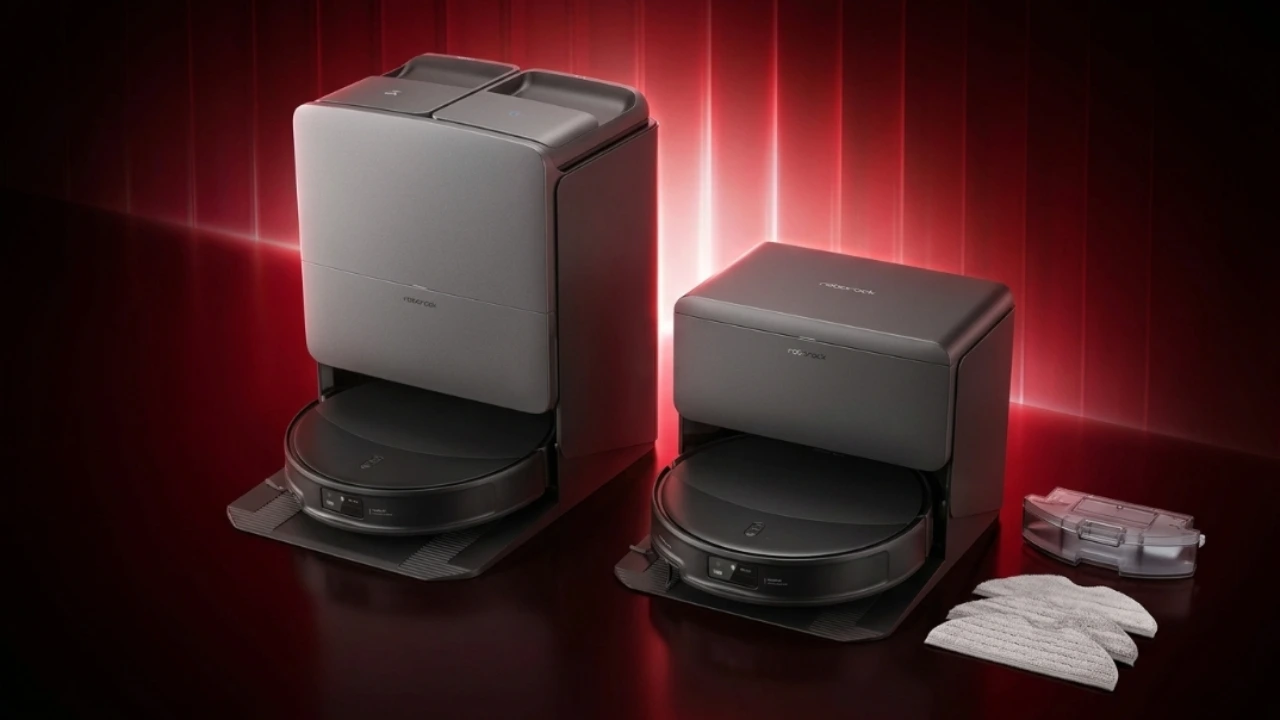
Suction Power: 36,000 Pa
Navigation: StarSight Autonomous System 2.0 — RGB camera + structured light, 300+ obstacle types
FlexiArm: Extends side brush and mop pad into 90° corners
Body Lift (AdaptiLift Chassis 3.0): Up to 30 mm over carpet and thresholds
Mop Lifting: Automatic — raises before carpet contact
Dock Functions: Auto-empty, auto-fill, mop wash and dry
The Roborock Saros 20 holds the highest raw suction figure on this list at 36,000 Pa, and it pairs that power with the most sophisticated navigation system currently available in the robot vacuum category. If your home has cluttered floors — cables, shoes, pet toys, charging mats, backpacks — the Saros 20 navigates around them more reliably than any other robot we've tested at this price tier.
The StarSight Autonomous System 2.0 uses a combination of RGB cameras, structured light, and the VertiBeam lateral sensor to read the room from multiple angles simultaneously. The result is recognition of over 300 distinct object types in real-time, including cables (which destroy brush rolls on robots that can't avoid them), pet waste, socks, and small toys. It doesn't just detect objects as generic obstacles — it classifies them and adjusts its route accordingly. A cable on the floor gets a wider berth than a charging brick sitting flat against the wall.
The AdaptiLift Chassis 3.0 raises the robot's body up to 30 mm over thick carpet piles and raised door thresholds. This is meaningfully different from edge-detection-based navigation that simply avoids those transitions — the Saros 20 climbs over them, continuing its cleaning path without rerouting. For homes with area rugs on hard floors, or older properties with raised transition strips between rooms, this matters in practice.
The FlexiArm is a design feature Roborock introduced specifically to solve the corner problem that every round-bodied robot vacuum shares. The extendable side brush and mop arm reach into 90-degree corners, covering the floor area that a standard circular robot body physically cannot reach. In a kitchen or bathroom where grout lines and wall-floor junctions accumulate grime, this translates to noticeably cleaner edges without requiring a manual follow-up.
Mopping performance is solid. The auto mop lifting system raises the pads before the robot transitions to carpet, preventing moisture transfer. The base station handles mop washing and drying automatically. Where the Saros 20 differs from the Dreame X60 Max Ultra is in mopping pressure — the X60 applies higher downward force for heavier scrubbing. The Saros 20 is better suited to maintenance mopping on regularly cleaned floors rather than deep-scrubbing sessions on floors that have been neglected.
The Saros 20 is the right choice for homes with a lot of floor-level clutter, uneven surfaces, area rugs on hard floors, or high pet activity. If you've tried cheaper robot vacuums and found them constantly getting stuck or dragging debris around, the navigation gap between this and a mid-range model is genuinely significant.
Pros
- 36,000 Pa — highest suction on this list
- StarSight 2.0 recognizes 300+ obstacle types including cables and pet waste
- FlexiArm extends into 90° corners other robots miss
- AdaptiLift raises 30 mm over thick rugs and raised thresholds
- Best for cluttered floors and multi-surface homes with area rugs
- Full auto-dock: empty, fill, mop wash and dry
Cons
- Premium price tier comparable to the Dreame X60 Max Ultra
- Dock is large — plan for dedicated placement near an outlet
- Mopping pressure lower than X60 Max Ultra for heavy scrubbing tasks
3. Ecovacs Deebot X8 Pro Omni — Best Mopping Hygiene
 Check Price on Amazon ↗
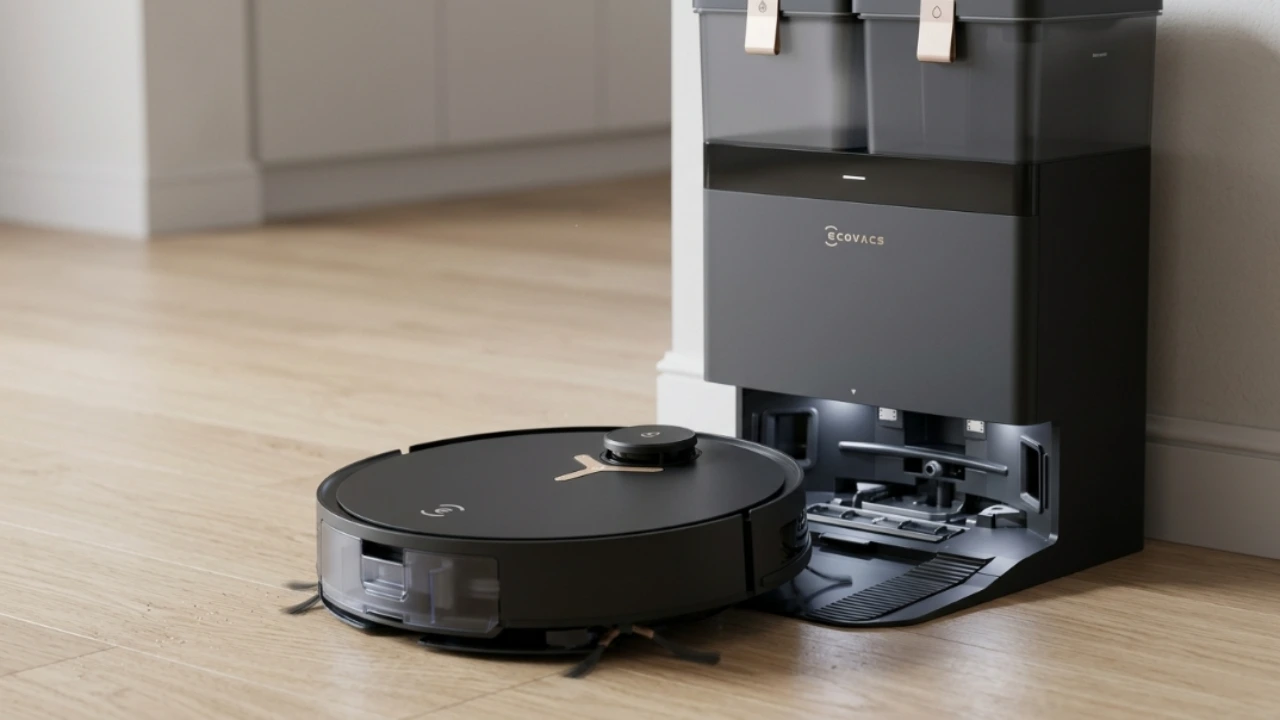
Suction Power: 18,000 Pa
Mopping System: OZMO ROLLER — continuous roller mop with 16 internal water nozzles
Mop Wash Temperature: Variable 40–75°C at the dock
Brush System: ZeroTangle 2.0 anti-wrap
AI Voice Control: YIKO-GPT natural language commands
Dock Functions: Auto-empty, auto-fill, mop wash and dry
The Ecovacs Deebot X8 Pro Omni approaches mopping differently from every other robot on this list, and for homes where mopping quality is the top priority, that difference is worth understanding.
Most robot mop systems — including rotating pad designs — pick up a certain amount of dirt on the mop surface, then continue spreading that contaminated moisture across the remaining floor area. You end up with a slightly more uniformly dirty floor rather than a clean one. The OZMO ROLLER system solves this by using 16 internal water nozzles that continuously spray fresh water onto the roller mop while it cleans. Dirty water is extracted from the roller simultaneously and returned to the dirty water tank. The surface making contact with your floor always has clean water on it, not the water that just picked up last week's grease and pet footprints from the kitchen tiles.
This is the same logic behind commercial cleaning equipment, and in practice the difference is visible on floors with dried-on food residue, pet paw prints, or anything that needs actual lifting rather than surface dampening. After a full cleaning run, the dock washes the roller at variable temperatures between 40°C and 75°C — hot enough to break down grease and reduce bacterial growth on the mop surface.
The suction power at 18,000 Pa sits below the top two models on this list. For hard floors and low-pile carpet, 18,000 Pa is more than adequate. For deep-pile carpet or heavily soiled floors, the X60 Max Ultra or Saros 20 will extract more debris in a single pass. The Deebot X8 Pro Omni is not designed around vacuuming power — it's designed around mopping hygiene, and it executes that design better than the competition.
The ZeroTangle 2.0 brush system uses a combination of blade geometry and combing elements to prevent hair from wrapping around the brush roll. In homes with long human hair or pet fur, brush wrapping is the most common maintenance headache with robot vacuums — the ZeroTangle system reduces how often you need to manually clear the brush.
YIKO-GPT natural language voice control lets you give commands like "Clean the kitchen area" or "Mop only the entryway" without navigating the app. The system understands room-context commands the way you'd speak them naturally, rather than requiring exact wake phrases. For users who find app-based robot control fiddly, this changes the day-to-day experience meaningfully.
The Deebot X8 Pro Omni is the right choice if your home has significant hard floor area — kitchen, bathrooms, open-plan living — and mopping quality genuinely matters to you. It's not the robot for carpet-heavy homes or users who need maximum suction above all else.
Pros
- OZMO ROLLER continuously delivers fresh water — no dirty-mop smearing
- 16 internal water nozzles clean the roller in real time during operation
- Variable temperature dock wash (40–75°C) genuinely sanitizes the mop
- ZeroTangle 2.0 brush significantly reduces hair wrap maintenance
- YIKO-GPT natural language voice commands — no app required for basic tasks
- Best mopping hygiene result on this entire list
Cons
- 18,000 Pa suction — lower than the top two models for deep carpet cleaning
- Mopping-first design is less suited to carpet-dominant homes
- Roller mop system adds maintenance complexity compared to pad-based designs
4. Shark PowerDetect 2-in-1 Robot — Best Value and Lowest Long-Term Cost
 Check Price on Amazon ↗
Suction Power: ~8,000 Pa
Base Station: NeverTouch Pro — fully bagless, no recurring bag costs
Mop System: Auto pad drop-off and auto pickup
Hands-Free Operation: Up to 60 days debris storage, 30 days water
Carpet Detection: Auto mop drop at dock before carpet pass
Suction Intelligence: Dirt Detect — boosts power when sensor detects high debris concentration
The Shark PowerDetect 2-in-1 Robot takes a different approach to automation than the premium models above it. Rather than competing on raw suction power or advanced mopping technology, it focuses on removing the maintenance routine entirely — and it does that better than any robot on this list.
The NeverTouch Pro base station is completely bagless. Where other auto-empty robots require you to buy and replace proprietary vacuum bags — an ongoing cost that adds up to $50–$100 per year depending on cleaning frequency — the Shark system uses a bagless container that you empty directly when full. At 60 days of debris capacity and 30 days of water tank capacity, the robot can run its full cleaning schedule for two months before you need to interact with the dock at all. For busy households where robot vacuum maintenance tends to get forgotten, this architecture makes the difference between a robot that keeps running and one that stops working because no one noticed the bag was full.
The mop system uses an auto drop mechanism: when the robot approaches carpeted areas, it drops the mop pad at the dock before starting its vacuuming pass, then picks it back up when returning to hard floors. This fully automatic carpet protection requires no app intervention or zone mapping — the robot handles the transition on its own. Carpets stay completely dry without any setup from the user.
Dirt Detect technology monitors the debris being ingested and boosts suction power automatically when it encounters a high-concentration area — a pile of sand near the door, pet kibble scattered under the feeding mat, or tracked-in grit on a hard floor entry. Power is saved on clean sections of floor and applied where it's needed. For a robot at this suction tier, the intelligent boost system makes the 8,000 Pa meaningfully more effective than the spec sheet number alone suggests.
At 8,000 Pa, the PowerDetect 2-in-1 is not the right choice for homes with thick carpet or heavy pet shedding on rugs. It's designed for hard floors and low-pile carpet — which covers the majority of modern homes with LVP, tile, or laminate. For those homes, it delivers reliable daily cleaning without the premium price or the ongoing maintenance cost of bag-based auto-empty systems. For a comparison with other cordless and robot Shark options, see our best vacuums for pet hair guide.
Pros
- NeverTouch Pro bagless base — no recurring bag replacement costs
- 60-day debris + 30-day water capacity — minimal maintenance interruptions
- Auto mop drop-off before carpet — carpet stays fully dry, no setup required
- Dirt Detect intelligently boosts suction in high-debris zones
- Lower price tier than premium models — best value-per-feature ratio here
- Simple, reliable automation suited to daily maintenance cleaning
Cons
- ~8,000 Pa suction — not suited for deep carpet cleaning or heavy pet shedding on rugs
- No AI obstacle avoidance — will push lightweight objects rather than classify and avoid them
- Mopping is maintenance-level — not designed for scrubbing stuck-on residue
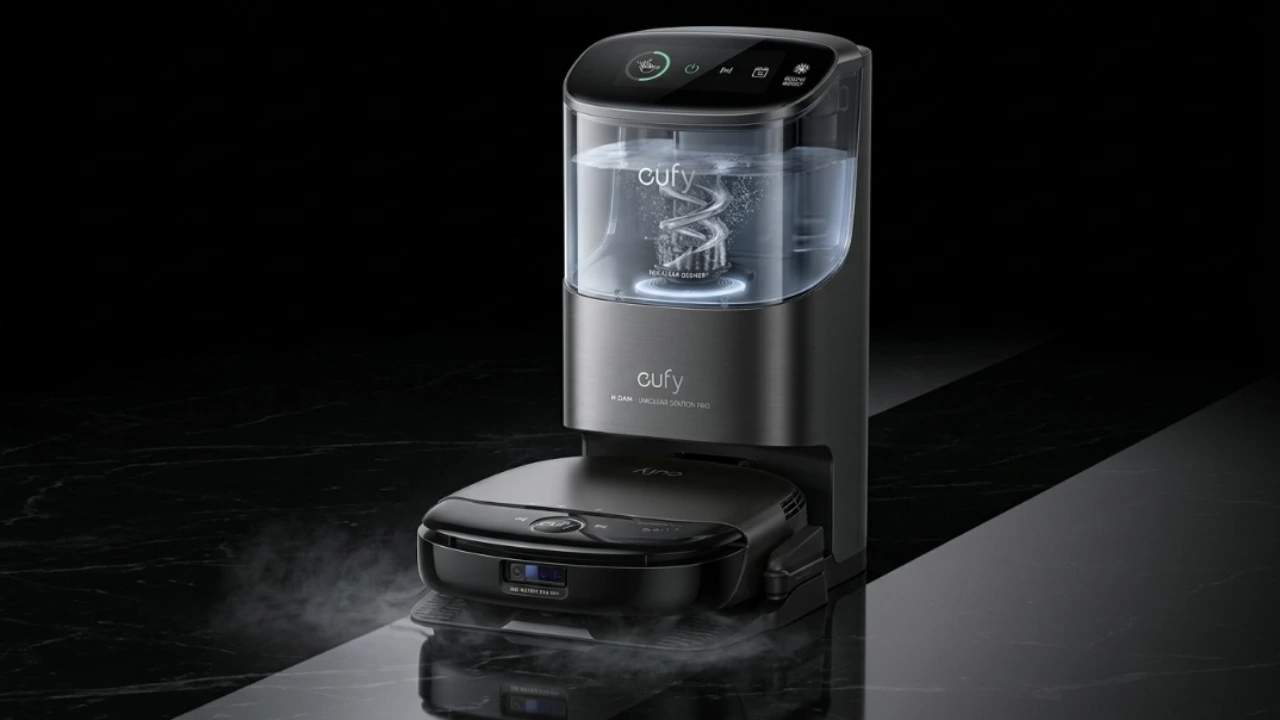
5. Eufy Omni S1 Pro — Best Deep Scrubbing and Hygiene Design
 Check Price on Amazon ↗
Suction Power: 8,000 Pa
Mop System: Always Clean Mop — 290 mm roller, 1 kg downward pressure
Water Sanitization: Eco-Clean Ozone generator
Body Design: Square front edge for wall and corner cleaning
Dock Controls: LCD touch screen — start/pause/mode without phone
Dock Functions: Auto-empty, auto-fill, mop wash and dry
The Eufy Omni S1 Pro sits at a similar suction level to the Shark PowerDetect, but its mopping system is in a different category. If your priority is deep floor scrubbing — genuinely clean tiles or hardwood rather than surface-level dampening — the S1 Pro is the most mechanically aggressive mop on this list at its price point.
The Always Clean Mop uses a 290 mm roller that applies 1 kg of downward pressure to the floor surface. That's approximately the equivalent of a human pressing a mop with light-to-moderate force — enough to actually dislodge dried residue rather than just wetting it. For context, standard robot mop systems apply 200–400 grams of force through pad weight alone. The S1 Pro applies more than double that through active pressure mechanics. On grout lines, tile floors with foot traffic buildup, and hardwood with dried spills, the difference in cleaning result after a single pass is noticeable.
The Eco-Clean Ozone generator inside the dock sanitizes the water before it reaches the mop roller. Ozone is a proven disinfectant that eliminates bacteria and odor-causing microbes at the water level — so what goes onto your floor isn't just tap water, it's water that's been treated to reduce bacterial load. For households with young children who play on hard floors, or for kitchen and bathroom areas where hygiene matters more than aesthetics, this is a meaningful functional difference.
The square front-end body design solves a limitation that every circular robot vacuum shares: a round body creates a curved approach angle to walls and corners, leaving a crescent of uncleaned floor at every edge. The flat front edge of the S1 Pro allows the robot to approach walls parallel, cleaning flush to the baseboard rather than at an angle. The mop roller reaches further into edges and corners without requiring a separate pass.
The LCD touch control panel on the dock lets you start, pause, and switch cleaning modes without opening the app. For users who find app-dependent robots frustrating — especially when a phone isn't nearby — this provides a practical alternative. The dock handles auto-empty, auto-fill, and mop washing automatically.
The S1 Pro is the right pick for users who prioritize mopping thoroughness over vacuuming power, live in homes with significant tile or hard floor area, and want a sanitized, actively scrubbed result rather than basic floor dampening. Like the PowerDetect, it's not designed for deep carpet cleaning. For a dedicated carpet and pet hair comparison, see our best Roomba for pet hair guide.
Pros
- 290 mm roller applies 1 kg downward pressure — most scrubbing force at this price
- Ozone water generator sanitizes water before floor contact
- Square front edge cleans flush to walls and into corners
- LCD dock controls — no phone required for basic operations
- Full auto-dock: empty, refill, mop wash and dry
Cons
- 8,000 Pa suction — not suitable for deep carpet or heavy pet fur on rugs
- Mopping-first design; choose a higher-Pa option if vacuuming is the main job
- Square body is less agile in tight spaces with furniture legs
How to Choose the Best Robot Vacuum Mop Combo for Your Home
Buying a robot vacuum mop combo is straightforward once you understand which specifications actually affect real-world cleaning — and which ones are just numbers on a spec sheet.
Suction Power (Pa): What You Actually Need
Pa (Pascal) measures the suction pressure the robot generates. Higher Pa means stronger debris pickup, particularly for embedded carpet dirt and fine dust on hard floors. For homes with primarily hard floors (LVP, tile, hardwood, laminate) and low-pile carpet, 6,000–12,000 Pa is adequate for daily maintenance cleaning. Medium-pile carpet and homes with pets that shed onto rugs benefit from 15,000–20,000 Pa. Deep carpet cleaning — where you want to extract embedded grit and allergens — genuinely improves at 30,000 Pa and above. Don't overpay for 36,000 Pa if your home is 90% hard floor.
Mopping System: Rotating Pads vs. Roller Mop
Rotating mop pads (Dreame X60 Max Ultra, Roborock Saros 20) spin against the floor in a circular scrubbing motion. High-RPM rotating pads with downward pressure are the most effective design for breaking up dried-on residue. Roller mops (Ecovacs Deebot X8 Pro Omni, Eufy Omni S1 Pro) roll across the floor like a cylinder. Continuous-wash roller systems that clean the mop surface in real time — as the Deebot X8 Pro Omni's OZMO ROLLER does — apply consistently clean water rather than contaminated moisture from earlier in the cleaning run. For maintenance mopping on clean floors, either works well. For tackling buildup, rotating pads with high pressure win. For hygiene on regularly mopped floors, continuous-wash rollers deliver cleaner results.
Automatic Mop Lifting on Carpet
This is non-negotiable if your home has carpet alongside hard floors. Without auto mop lifting, the robot will transfer moisture to carpet fibers every time it crosses a transition — over weeks and months that causes odor and potential damage. Every model on this list handles carpet protection differently: some lift the mop pads mechanically before crossing onto carpet, others drop the pads at the dock before starting a carpet-focused vacuuming pass. Both work. The dock-drop method (Shark PowerDetect) is more conservative — the mop never reaches carpet at all. The lift method raises the pad several centimeters, which prevents contact in all but the deepest pile situations.
LiDAR Navigation vs. Camera-Based Navigation
LiDAR navigation uses a laser ranging tower to build a precise, distance-accurate map of your home. It works reliably in low light, maps corners and furniture accurately, and creates the kind of structured room map that allows zone-specific scheduling. Camera-based navigation supplements LiDAR with visual object recognition — identifying cables, shoes, pet waste, and other obstacles by appearance rather than just distance. The best robots in 2026 use both: LiDAR for mapping and efficient path planning, cameras for obstacle classification. All five models on this list are LiDAR-equipped. The Roborock Saros 20 adds multi-sensor AI classification for the most thorough obstacle avoidance available.
Auto-Empty Dock: Bag vs. Bagless
Auto-empty docks pull collected debris from the robot's dustbin into a larger container at the base station. Most use disposable bags that need replacing every 1–3 months — a recurring cost of $20–$40 per pack. The Shark PowerDetect 2-in-1's NeverTouch Pro base is bagless, which eliminates that cost entirely and the reminder to order new bags. If you'll actually maintain a bag-based system, it works fine. If you know from experience that robot maintenance tends to be neglected, the bagless approach reduces the number of things that can stop the robot from functioning on its regular schedule.
Floor Coverage and Battery Runtime
Most robot vacuums advertise coverage areas of 2,000–3,000 sq ft per charge, with runtime in the 2.5–3.5 hour range. For most homes under 2,000 sq ft, a single charge covers a complete clean with battery to spare. Larger open-plan homes or multi-floor setups should verify the robot can complete a full floor without returning to dock mid-session. All robots on this list return to dock automatically to recharge and resume cleaning where they left off — the practical difference is whether a 2,500 sq ft home requires one interruption or completes in a single pass.
Who Doesn't Need a Robot Vacuum Mop Combo
If your home is entirely carpet, a robot vacuum mop combo gives you no benefit on the mopping side and may cost more than a vacuum-only robot with better carpet suction at an equivalent price. If you have mostly carpet with just a small kitchen area of hard floor, a cordless stick vacuum for daily use plus occasional manual mopping covers the hard floor more thoroughly than any robot mop at the same budget. Robot vacuum mop combos deliver maximum value in homes where hard floors represent the majority of floor area — open-plan living spaces, tile kitchens and bathrooms, or homes with hardwood throughout.
Side-by-Side Comparison: All 5 Robot Vacuum Mop Combos
| Model | Suction (Pa) | Mopping System | Mop Wash Temp | Carpet Protection | Best For | Rating |
|---|---|---|---|---|---|---|
| Dreame X60 Max Ultra | 35,000 | Dual rotating pads (230 RPM, 15N) | 100°C boiling water | Auto mop lift | Best overall — mixed floors, deep cleaning | 9.5/10 |
| Roborock Saros 20 | 36,000 | FlexiArm extending mop pad | Hot water wash | Auto mop lift + AdaptiLift chassis | Best navigation — cluttered homes, area rugs | 9.2/10 |
| Ecovacs Deebot X8 Pro Omni | 18,000 | OZMO ROLLER — 16-nozzle real-time clean | 40–75°C variable | Auto mop lift | Best mopping hygiene — tile, open-plan hard floors | 8.9/10 |
| Shark PowerDetect 2-in-1 | ~8,000 | Auto pad drop-off system | Room temp rinse | Dock drop-off before carpet | Best value — low-pile carpet, LVP, tile, minimal maintenance | 8.7/10 |
| Eufy Omni S1 Pro | 8,000 | 290 mm roller (1 kg pressure) | Ozone-treated water | Auto mop lift | Best scrubbing — tile and hard floor homes, hygiene priority | 8.5/10 |
Robot Vacuum Mop Maintenance: What Actually Matters
A robot vacuum mop is a machine with moving parts, sensors, a battery, a filter, and a mopping system. How you maintain it determines how long it performs at its rated specification — and whether it keeps your floors genuinely clean or just goes through the motions of cleaning.
Clean or replace the main brush roll weekly in pet households, every two weeks in homes without pets. Hair and fiber wrap tightly around brush rolls during operation. Left in place, it hardens into a dense mat that reduces brush efficiency and puts stress on the motor. Most robots include a cleaning tool — use it before the wrap becomes difficult to remove.
Empty and rinse water tanks after every cleaning session. Standing water in a warm environment grows bacteria and mold within 24–48 hours. On auto-empty models this happens at the dock automatically, but verify the clean water tank and dirty water container are both maintained. A dirty water tank that isn't emptied regularly transfers odor back to the mop system on the next cycle.
Wash filters every 2–4 weeks. Robot vacuum filters restrict airflow as they accumulate fine dust. A clogged filter reduces effective suction regardless of what Pa rating the motor produces. Most robot vacuum filters are washable — rinse under cold water, allow at least 24 hours to fully dry before reinstalling. Running the robot with a damp filter damages the motor over time.
Wipe sensors and cameras monthly. LiDAR towers, cliff sensors, and obstacle cameras accumulate dust and smear from the cleaning environment. A sensor partially obscured by dust produces degraded mapping accuracy — the robot makes more navigation errors and leaves more uncleaned areas. A soft microfiber cloth on the sensor surfaces takes two minutes and prevents these issues entirely.
Replace mop pads based on visible wear, not just time. Pad degradation depends on floor type and cleaning frequency. Tile floors with grout lines wear pads faster than smooth laminate. When a pad loses its texture and starts sliding without friction, it's no longer scrubbing — it's just wet contact. Replace when performance drops, not on a fixed monthly schedule. For hardwood floors specifically, a worn pad that drags rather than absorbs can leave micro-scratch marks over time.
Keep the dock area clear of clutter. A robot that can't dock cleanly — blocked by a cable, a shoe, or an item knocked in front of the station — misses its cleaning schedule entirely. A 30 cm clear radius around the dock and a straight approach path prevents most failed docking events.
Frequently Asked Questions
What is the best robot vacuum and mop combo in 2026?
The Dreame X60 Max Ultra. It combines 35,000 Pa suction, dual rotating mop pads at 230 RPM with 15N pressure, 100°C boiling water mop pad sanitization, a retractable LiDAR tower that drops the chassis to 7.95 cm for under-furniture cleaning, and a fully automated dock that empties, refills, and washes without manual input. It's the most complete robot vacuum mop combo available in 2026 for homes with mixed flooring and genuine cleaning demands.
Are robot vacuum mop combos worth it in 2026?
Yes, for homes with significant hard floor area. Modern combos handle daily maintenance vacuuming and mopping with minimal setup — schedule them once and they operate independently. They don't replace deep cleaning, but they extend the time between manual cleaning sessions meaningfully. The 2026 generation added auto mop lifting, boiling water pad sanitization, and real obstacle avoidance, making them genuinely useful rather than a novelty.
Can robot vacuum mop combos damage carpets?
They can if the mop pad stays in contact with carpet. Every model on this list includes automatic carpet protection — either by raising the mop pads before transitioning to carpet, or by dropping them at the dock before a carpet-focused vacuuming pass. Without this feature, moisture transfers to carpet fibers and causes odor over time. Always verify auto mop lifting is included before buying any robot combo for a mixed-floor home.
What Pa suction do I need for a robot vacuum?
For hard floors and low-pile carpet, 6,000–10,000 Pa handles daily maintenance cleaning adequately. For medium-pile carpet with pets, 15,000–20,000 Pa delivers noticeably better extraction. For deep carpet cleaning with embedded debris, 30,000 Pa and above makes a meaningful difference. Don't pay for high Pa if your home is primarily hard floor — the gain over 10,000 Pa on smooth surfaces is marginal.
What is the difference between rotating mop pads and a roller mop?
Rotating pads spin in circles against the floor — at high RPM with downward pressure, they scrub effectively. A continuous-wash roller mop uses 16 internal nozzles to clean the roller while it moves across the floor, meaning fresh water always contacts the surface rather than dirty rinse water from earlier in the run. Rotating pads are better for breaking up stuck-on residue. Continuous-wash roller systems deliver better hygiene on regularly cleaned floors.
Do robot vacuum mop combos work on all floor types?
All models on this list work on hard floors and low-to-medium pile carpet. The key variable for carpet is suction power and mop lifting reliability. High-pile carpet over 15 mm requires strong suction and a robot that can physically climb the pile height — the Roborock Saros 20 and Dreame X60 Max Ultra handle this best. For deep carpet cleaning as the primary use case, also see our best Roomba for pet hair guide and our best vacuums for pet hair guide for dedicated carpet-performance comparisons.
What is LiDAR navigation in a robot vacuum?
LiDAR (Light Detection and Ranging) uses a spinning laser sensor — typically in a tower on top of the robot — to measure precise distances to walls and furniture by timing reflected laser pulses. This builds an accurate room map and allows the robot to navigate in structured, efficient paths rather than random-bounce patterns. LiDAR robots cover more floor area per charge, leave fewer missed spots, and create maps accurate enough for room-specific scheduling. All five models on this list use LiDAR-based navigation as their primary mapping system.
How often should I run a robot vacuum mop?
For vacuuming, daily or every other day keeps hard floors and low-pile carpet visibly clean. For mopping, 2–4 times per week is sufficient for most homes. High-traffic zones — kitchens, entryways — benefit from daily mopping cycles. Homes with pets that shed or track in outdoor debris daily should run vacuuming cycles every day and mopping cycles at least 3–4 times per week.
Conclusion & Final Recommendations
The Dreame X60 Max Ultra earns the top position through cleaning performance data. If you want the most capable robot vacuum mop combo available in 2026 — strong suction, genuine scrubbing pressure, boiling water mop sanitization, and a fully automated dock — it covers every aspect of the category at a level no other model consistently matches.
If your home has cluttered floors, area rugs on hard surfaces, or raised thresholds that cheaper robots can't navigate, the Roborock Saros 20 is the smarter choice. The combination of FlexiArm corner cleaning, 300-object AI obstacle avoidance, and AdaptiLift chassis makes it purpose-built for real-home complexity rather than ideal lab conditions.
For homes where mopping hygiene is the top priority — tile kitchens, open-plan hard floors that genuinely need to be clean rather than just damp — the Ecovacs Deebot X8 Pro Omni's continuous-wash OZMO ROLLER system delivers a different standard of floor cleanliness than pad-based designs. The Eufy Omni S1 Pro sits at a similar price tier with higher mechanical scrubbing pressure if floor cleanliness is what matters most.
The Shark PowerDetect 2-in-1 is the right pick for buyers who want solid, low-maintenance daily cleaning without premium pricing. The bagless dock, 60-day debris capacity, and automatic carpet mop drop-off system deliver genuine hands-free operation for homes with mostly hard floors and light carpet.
The most important principle when choosing: match the robot to how your home actually gets dirty, not to the maximum spec. A 35,000 Pa robot in a 600 sq ft apartment with laminate floors is more machine than the job needs. A robot with no AI obstacle avoidance in a home with three kids, a dog, and cables everywhere will spend more time stuck than cleaning. Get the Pa level right for your floor type, get mop lifting confirmed for carpet, and get navigation capability that matches your home's complexity — and you'll end up with a robot that runs on its schedule without becoming a maintenance chore itself.